Teesri Taali, originally authored by Pradeep Saurabh (also circulated under the spelling Teesari Taali), stands as a landmark contribution to contemporary Indian literature on gender, identity, and marginality. As a work of fiction, the text offers a deeply empathetic and socially conscious portrayal of the third gender, illuminating their struggles, resilience, and enduring quest for dignity within a society structured by entrenched hierarchies.
A central strength of the book lies in its authentic representation of transgender subjectivity. Saurabh refuses to reduce transgender individuals to symbolic tropes or sociological abstractions. Instead, he foregrounds their lived realities—marked by emotional complexity, vulnerability, and courage. The narrative exposes the contradictions between cultural practices that ritually celebrate hijras and the persistent discrimination they face in everyday life, thereby challenging dominant heteronormative frameworks.
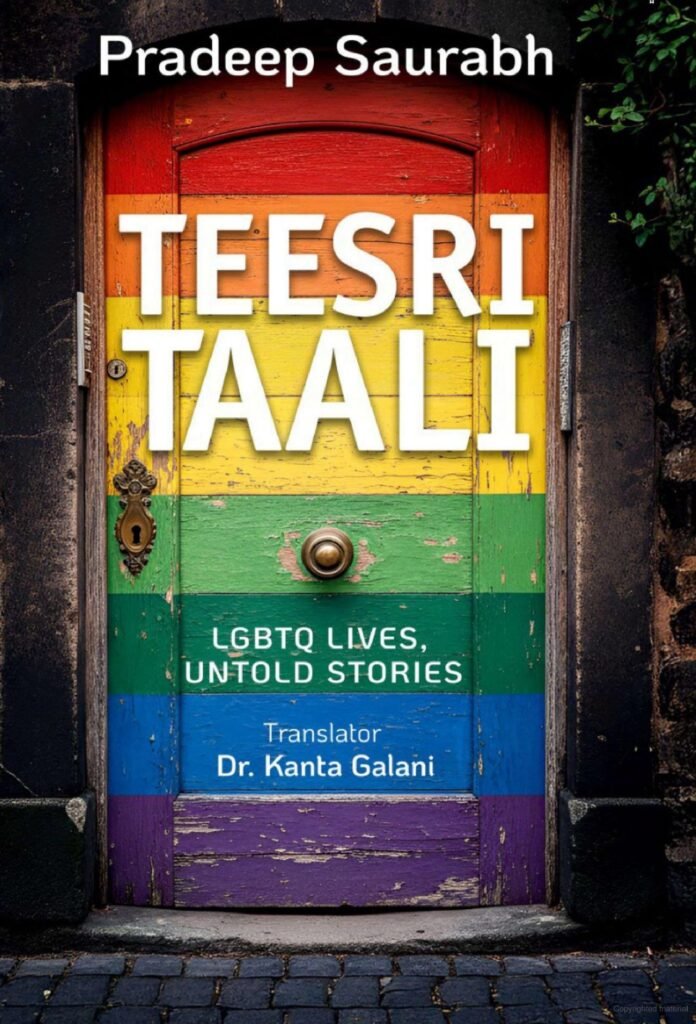
The title itself carries profound cultural significance. It refers to the distinct third clap used by the Hijra community, a gesture that symbolizes their unique identity, social presence, and collective assertion. This symbolic layer enriches the narrative, offering readers insight into the semiotics of gender variance in South Asian culture.
The text is equally notable for its historical consciousness. It situates transgender identities within India’s long cultural continuum, referencing precolonial acceptance, Mughal patronage, and the systematic marginalization that emerged under colonial rule. This historical layering underscores that the stigmatization of transgender communities is not inherent or inevitable but the result of specific sociopolitical transformations.
From a literary perspective, Teesri Taali employs a clear, engaging, and accessible style while maintaining analytical depth. Its narrative structure allows for intimate personal reflection alongside broader cultural critique, making it a valuable resource for scholars of gender studies, cultural studies, and postcolonial literature. The text resonates strongly with contemporary debates on gender fluidity, legal recognition, and the politics of representation.
A significant dimension of the book’s contemporary relevance is its English translation by Dr. Kanta Galani (English Literature & Language Arts), Assistant Professor, Department of English, Government Central Sanskrit University, Jaipur, India. The translation strives to preserve the emotional intensity and socio‑cultural specificity of Saurabh’s Hindi original, ensuring that the nuances of transgender experience—linguistic, cultural, and affective—are conveyed with fidelity to a wider readership. Dr. Galani’s work bridges linguistic boundaries without diluting the text’s authenticity or narrative power.
Furthermore, Teesri Taali contributes meaningfully to the expanding corpus of transgender narratives in twenty‑first‑century India. By amplifying voices historically silenced or misrepresented, the book not only documents the lived struggles of a marginalized community but also asserts their rightful place within India’s cultural and literary imagination.
In conclusion, Teesri Taali is a compelling, insightful, and academically valuable text that interrogates entrenched social hierarchies while celebrating the agency and humanity of transgender individuals. It stands as an essential resource for scholars, students, and readers seeking to understand the intersections of gender, culture, and identity in contemporary India. Its contribution to queer literature and social discourse is both timely and enduring.