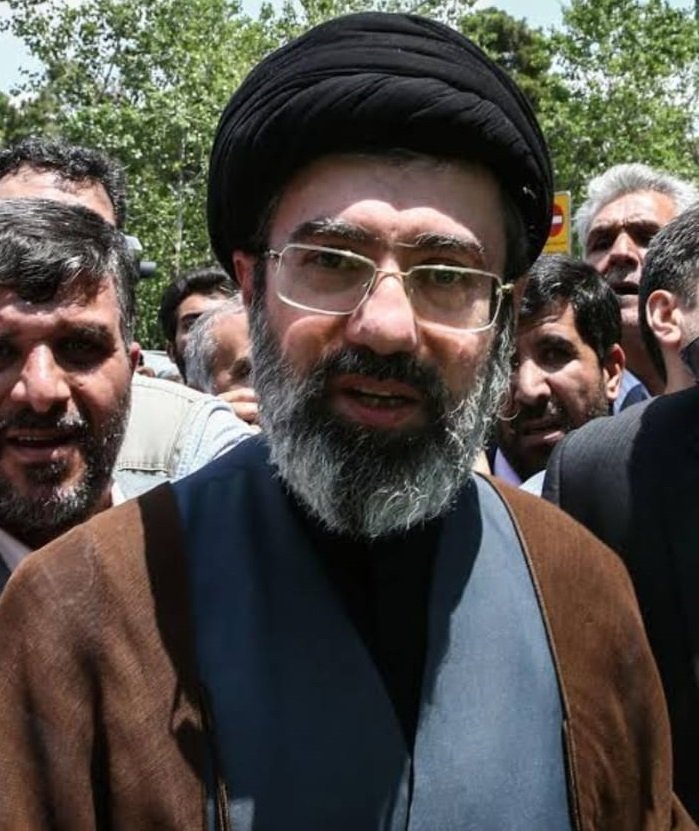
Who Is Mojtaba Khamenei, The New Supreme Leader of Iran?
Tehran/ Agenices/ Mojtaba Khamenei, son of the recently-killed Ayatollah Ali Khamenei, has been selected as the next supreme leader of Iran by the country’s Assembly of Experts.
“The Assembly of Experts elected Ali Khamenei’s son Mojtaba as the next Supreme Leader,” Iran International reported, citing informed sources. He was picked under under pressure from the Iranian Revolutionary Guard Corps (IRGC).
On Saturday, the Supreme Leader Ayatollah Ali Khamenei was killed in a joint operation by the US and Israel. He will now be buried in the holy city of Mashhad. While declaring 40-day mourning, the authorities have also planned a “large farewell ceremony” in Tehran.
Who is Mojtaba Khamenei?
Mojtaba Hosseini Khamenei (born 8 September 1969 in Mashhad) is a cleric and a powerful, behind-the-scenes political figure best known as the second-eldest son of Ayatollah Ali Khamenei.
Background and family
Mojtaba grew up during the anti-monarchy revolutionary struggle in Iran and later moved to Tehran, where he attended the elite Alavi High School, an institution associated with regime insiders. His father’s rise from cleric-opponent of the Shah to president and then Supreme Leader placed the family at the center of post-1979 power structures.
US Navy Could Escort Tankers Through The Strait of Hormuz: US President Trump
Military and security role
Mojtaba served in the Islamic Revolutionary Guard Corps (IRGC) during the Iran-Iraq War, mainly in the “Habib Battalion,” which helped him build close ties with future senior security commanders. He later became closely associated with the Basij militia and is widely reported to have played a role in internal security operations, including the suppression of protests after the disputed 2009 election.
Although he has never held formal government office, Mojtaba built influence through clerical-network ties, IRGC connections, and proximity to his father’s office. He studied advanced Islamic theology and jurisprudence in Qom and Tehran, embedding himself in conservative clerical circles even though his formal clerical rank is relatively modest.